
The Skills (R)evolution in the Automotive-Mobility Ecosystem conference took place on 21 April in Cluj-Napoca, Romania, and this year’s edition was the strongest to date. With 150+ participants and 37 speakers, the conference has firmly established itself as a key gathering point for those working on automotive and mobility skills across Europe.
The two-day programme opened on the evening of 20 April with a welcome reception at the historic Casino Building in Parcul Central, preceded by an optional visit to the TestEcoCel laboratory at the Technical University of Cluj-Napoca, where participants explored hydrogen-to-wheel testing environments and the ART Formula Student team facilities.
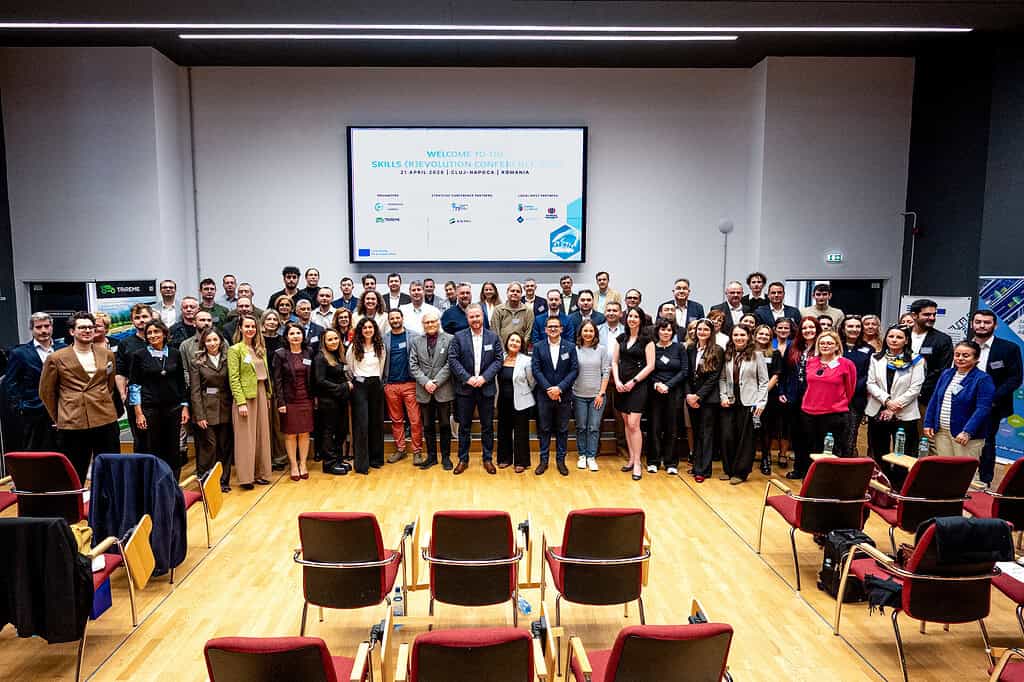
The conference day on 21 April opened with a high-level fireside chat on skilled people powering Europe’s innovation and competitiveness, featuring Victor Negrescu, Vice-President of the European Parliament, and Adrian Sandu, Secretary General of ACAROM. Two panel discussions followed: the first addressed securing today’s workforce and shaping tomorrow’s talent, drawing on perspectives from Ford Otosan, Bosch Engineering Center Cluj, Nokian, Infineon, IndustriALL, and the STEM Coalition; the second focused on aligning national and European efforts for competitiveness, with contributions from Renault Group Dacia Romania, AROBS Transilvania Software, Ceemet, and the Chips Joint Undertaking.
The afternoon sessions presented results from the TRIREME Blueprint project, covering skills intelligence findings, the automotive competence matrix, training frameworks, and the Sectoral Skills Strategy. In a notable addition to previous editions, the European Chips Skills Academy (ECSA) presented its parallel work in the semiconductors sector, reflecting the growing convergence between automotive and semiconductor skills needs. A joint session explored the expected roll-out and impact of both Blueprint projects.
A dedicated session on regional good practices from Romania and the Danube region showcased initiatives from BMW Group TechWorks Romania, the Romanian Chip Competence Centre, Transylvania Energy Cluster, and two student-led EV projects from the Technical University of Cluj-Napoca. The conference closed with a networking dinner and EV prototype showcase featuring the Solis-EV and ART TU Formula Car.
This year’s edition was co-organised with ECSA and supported by the TRIREME Erasmus+ Blueprint project, the Pact for Skills, and the Regional Skills Partnership for Twin Transformation. Local hosting was provided by Transilvania IT Cluster, Cluj-Napoca Municipality, and the Technical University of Cluj-Napoca, to whom we extend our sincere thanks.
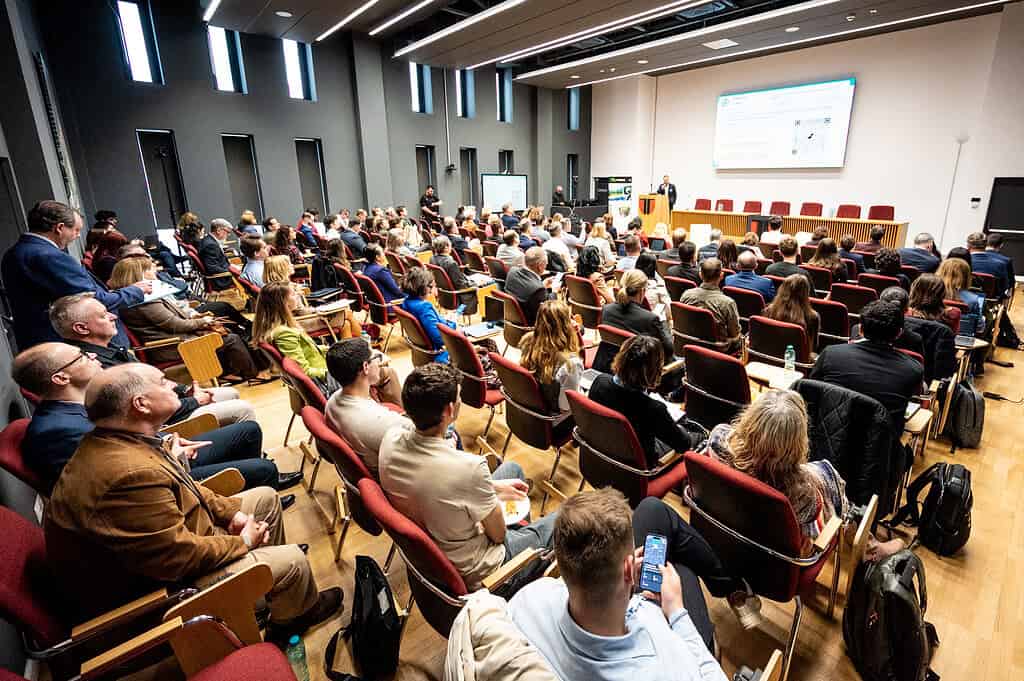
The conference is growing in both scale and scope, and we expect it to continue doing so. The connections made and discussions held in Cluj-Napoca will carry forward into the work of the coming year.